Species page
Basking Shark
Huge open-mouthed filter feeder of cooler seas.
Cetorhinus maximus
Endangered
Species page
Huge open-mouthed filter feeder of cooler seas.
The basking shark is a giant plankton feeder of cool, productive seas. Its size can be surprising, but its behavior is usually gentle and unhurried, with the open mouth serving as a drifting sieve rather than a weapon. This enormous shark has a long conical snout, huge gill openings that nearly encircle the head, a large triangular dorsal fin, and a cavernous mouth used for filter feeding. The basking shark ranges through temperate and some cool subtropical waters in both hemispheres. It often appears where plankton is concentrated near fronts, headlands, or shelf breaks.
Although often seen near the surface, it uses a wide depth range in coastal and oceanic waters. Seasonal movements can carry it between surface feeding grounds and deeper offshore habitat.
The second-largest fish alive.
Why it matters: It is the second-largest living fish after the whale shark.
This enormous shark has a long conical snout, huge gill openings that nearly encircle the head, a large triangular dorsal fin, and a cavernous mouth used for filter feeding.
The basking shark ranges through temperate and some cool subtropical waters in both hemispheres. It often appears where plankton is concentrated near fronts, headlands, or shelf breaks.
Although often seen near the surface, it uses a wide depth range in coastal and oceanic waters. Seasonal movements can carry it between surface feeding grounds and deeper offshore habitat.
Enormous gill rakers for filtering plankton
Compare it against Whale Shark.
Basking sharks are harmless filter feeders. The larger human story is historical hunting and ongoing concern over collisions, entanglement, and slow recovery.
These links are meant to help readers continue through related species, not force extra clicks.
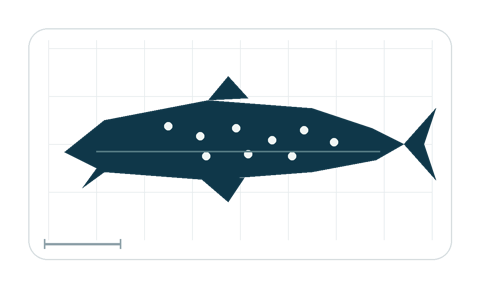
The planet's largest fish, but a gentle filter feeder.