Species page
Bonnethead
Small hammerhead with a rounded head and quick turns.
Sphyrna tiburo
Least Concern
Species page
Small hammerhead with a rounded head and quick turns.
This shark belongs to the hammerhead family, where the head itself is the signature field mark. PocketShark uses that broad sensory platform as the visual anchor, then adds species-specific differences when the source base is stronger. The side-expanded head is the obvious character, but body shape, dorsal-fin proportions, and the outline of the cephalofoil help separate species. Hammerheads occur mainly in tropical, subtropical, and warm-temperate seas worldwide. Species ranges span estuaries, reefs, continental shelves, and open ocean.
The family uses both coastal and pelagic habitat, with juveniles often favoring shallow nursery areas and larger animals moving more broadly.
A distinct hammerhead that makes frequent shallow-water appearances.
Why it matters: The hammer-shaped head spreads sensory organs over a wide area, which may improve navigation and prey detection.
The side-expanded head is the obvious character, but body shape, dorsal-fin proportions, and the outline of the cephalofoil help separate species.
Hammerheads occur mainly in tropical, subtropical, and warm-temperate seas worldwide. Species ranges span estuaries, reefs, continental shelves, and open ocean.
The family uses both coastal and pelagic habitat, with juveniles often favoring shallow nursery areas and larger animals moving more broadly.
Compact hammerhead shape
Compare it against Great Hammerhead, Scalloped Hammerhead, and Sphyrna Alleni.
Some large hammerheads deserve caution, yet direct incidents are uncommon compared with the scale of fishery mortality faced by the family.
Species-level taxonomy was verified from Sharkipedia's current species list and taxonomy workbook. In this pass, the narrative fields are cautious family-level placeholders synthesized from broad shark references, chiefly the FAO Sharks of the World catalogue, because a stronger multi-source species-level synthesis was not assembled here without risking invented detail. Replace this with a direct species-level synthesis before publication in the app.
These links are meant to help readers continue through related species, not force extra clicks.

Long-cephalofoil hunter that patrols warm coastal waters.
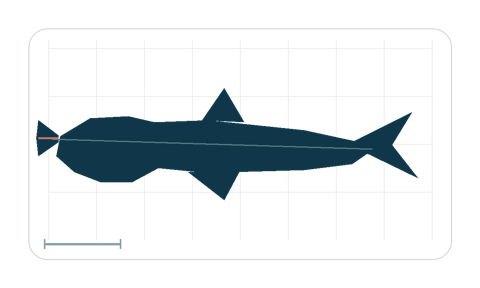
Distinct hammer-shaped head packed with sensory power.
Shark species in Sphyrnidae.
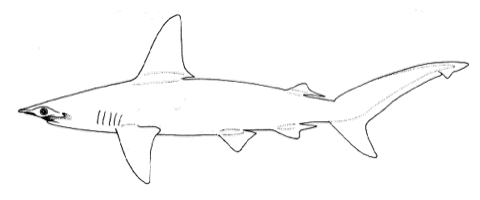
Shark species in Sphyrnidae.