Species page
ゲンロクザメ
Shark species in Centrophoridae.
Centrophorus tessellatus
Species page
Shark species in Centrophoridae.
Gulper sharks are deep-slope specialists that live far below the bright, familiar part of the sea. For PocketShark, this is a provisional deepwater profile: long snout, dorsal spines, and a very slow life history are the family hallmarks. Centrophorids usually have a relatively long snout, large greenish eyes, two dorsal fins with spines, and a slender to moderately robust deepwater body. Gulper sharks are patchily distributed along continental and insular slopes in tropical, subtropical, and temperate seas. Many species are known from scattered deepwater records rather than continuous mapped ranges.
They are deepwater slope sharks that usually live well below normal diving depths, often over muddy or mixed bottoms on the outer shelf and upper to mid-slope.
Added from the World Register of Marine Species (WoRMS).
Why it matters: Several gulper sharks were historically targeted for their oil-rich livers rather than for meat alone.
Centrophorids usually have a relatively long snout, large greenish eyes, two dorsal fins with spines, and a slender to moderately robust deepwater body.
Gulper sharks are patchily distributed along continental and insular slopes in tropical, subtropical, and temperate seas. Many species are known from scattered deepwater records rather than continuous mapped ranges.
They are deepwater slope sharks that usually live well below normal diving depths, often over muddy or mixed bottoms on the outer shelf and upper to mid-slope.
Family: Centrophoridae
Compare it against Centrophorus Harrissoni, Centrophorus Isodon, and Centrophorus Lesliei.
They are seldom encountered by the public. Their main risk comes from deepwater fisheries, where low productivity makes recovery slow.
Species-level taxonomy was verified from Sharkipedia's current species list and taxonomy workbook. In this pass, the narrative fields are cautious family-level placeholders synthesized from broad shark references, chiefly the FAO Sharks of the World catalogue, because a stronger multi-source species-level synthesis was not assembled here without risking invented detail. Replace this with a direct species-level synthesis before publication in the app.
These links are meant to help readers continue through related species, not force extra clicks.
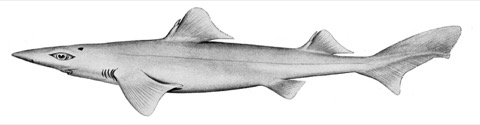
Shark species in Centrophoridae.
Shark species in Centrophoridae.
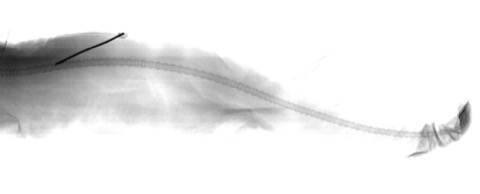
Shark species in Centrophoridae.
Shark species in Centrophoridae.