Species page

Cephaloscyllium Cooki

Catsharks are generally small to medium sharks with slender bodies, elongated tails, and patterned skin marked by spots, saddles, or reticulation. Catsharks are widely distributed from tropical to temperate seas around the world. Some species are shallow shelf residents, but many others live on slopes, seamounts, and deep benthic habitats. Most species are bottom-associated and favor reefs, soft-bottom shelves, canyons, or upper-slope terrain. Habitat varies substantially by genus.

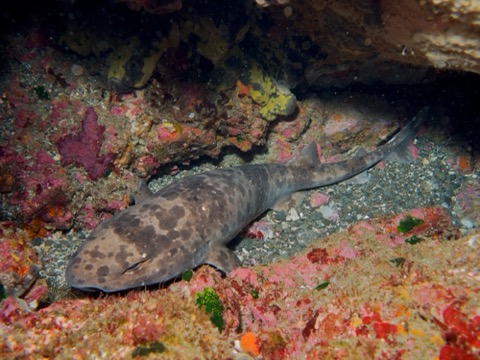
Cephaloscyllium cooki
Overview

Catsharks are generally small to medium sharks with slender bodies, elongated tails, and patterned skin marked by spots, saddles, or reticulation. Catsharks are widely distributed from tropical to temperate seas around the world. Some species are shallow shelf residents, but many others live on slopes, seamounts, and deep benthic habitats. Most species are bottom-associated and favor reefs, soft-bottom shelves, canyons, or upper-slope terrain. Habitat varies substantially by genus.

Most species are bottom-associated and favor reefs, soft-bottom shelves, canyons, or upper-slope terrain. Habitat varies substantially by genus.

Why it matters: Many catshark egg cases are the classic 'mermaid's purses' washed ashore after hatching.

Scientific nameCephaloscyllium cooki
FamilyScyliorhinidae
OrderCarcharhiniformes
Max length0.3 m

What this shark is

Catsharks are generally small to medium sharks with slender bodies, elongated tails, and patterned skin marked by spots, saddles, or reticulation.

Where it lives

Catsharks are widely distributed from tropical to temperate seas around the world. Some species are shallow shelf residents, but many others live on slopes, seamounts, and deep benthic habitats.

Most species are bottom-associated and favor reefs, soft-bottom shelves, canyons, or upper-slope terrain. Habitat varies substantially by genus.

How it differs from similar sharks

Body shape, size, and habitat are the main cues that separate it from related sharks.

Compare it against Blotchy swell shark, Cephaloscyllium Albipinnum, and Cephaloscyllium Fasciatum.

Why it is notable

They are usually harmless and seldom noticed outside trawls, research catches, aquaria, or night dives.

Related shark pages

These links are meant to help readers continue through related species, not force extra clicks.

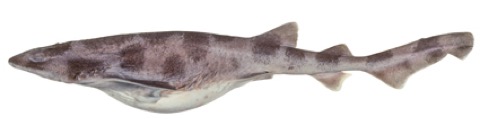
Blotchy swell shark photograph showing the mottled back and broad head; not to scale.
Cephaloscyllium umbratile

Blotchy swell shark

Catsharks are generally small to medium sharks with slender bodies, elongated tails, and patterned skin marked by spots, saddles, or reticulation.

1.2 m max
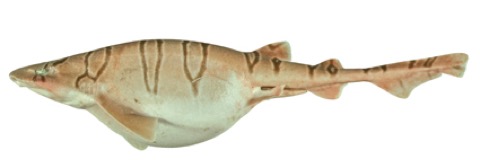
Whitefin swellshark reference photograph showing the broad head and white fin margins; not to scale.
Cephaloscyllium albipinnum

Cephaloscyllium Albipinnum

Catsharks are generally small to medium sharks with slender bodies, elongated tails, and patterned skin marked by spots, saddles, or reticulation.

1.0 m max
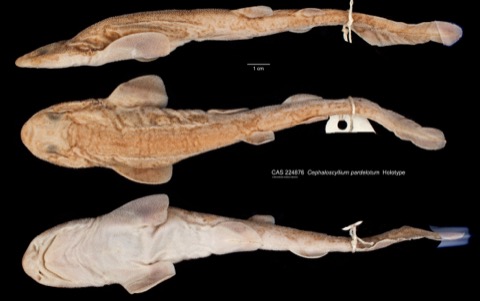
California Academy of Sciences specimen photograph of Cephaloscyllium fasciatum in lateral view; not to scale.
Cephaloscyllium fasciatum

Cephaloscyllium Fasciatum

Catsharks are generally small to medium sharks with slender bodies, elongated tails, and patterned skin marked by spots, saddles, or reticulation.

0.4 m max
Reticulated swellshark reference photograph showing the netlike patterning and broad head; not to scale.
Cephaloscyllium hiscosellum

Cephaloscyllium Hiscosellum

Catsharks are generally small to medium sharks with slender bodies, elongated tails, and patterned skin marked by spots, saddles, or reticulation.

0.5 m max