Species page
Dwarf Lanternshark
One of the smallest sharks on Earth.
Etmopterus perryi
Data deficient
Species page
One of the smallest sharks on Earth.
Lanternsharks are miniature deepwater predators that often carry their own dim light show. In PocketShark, this family entry signals a small dark shark of the deep slope, usually better known from catches than from direct observation. Most lanternsharks are small, dark sharks with no anal fin, dorsal spines, and light-producing photophores arranged in species-specific patterns. Lanternsharks are found in deep tropical, subtropical, and temperate waters worldwide. Many species have localized ranges or are known from only a few deepwater regions.
They usually inhabit outer continental shelves, slopes, seamount flanks, and deep pelagic layers, often well below sunlight.
Known as an ultra-small deep-water shark.
Why it matters: The photophore patterns of lanternsharks are so distinctive that they can help separate similar-looking species.
Most lanternsharks are small, dark sharks with no anal fin, dorsal spines, and light-producing photophores arranged in species-specific patterns.
Lanternsharks are found in deep tropical, subtropical, and temperate waters worldwide. Many species have localized ranges or are known from only a few deepwater regions.
They usually inhabit outer continental shelves, slopes, seamount flanks, and deep pelagic layers, often well below sunlight.
Bioluminescent belly
Compare it against Brown lanternshark, Etmopterus Alphus, and Etmopterus Benchleyi.
They seldom interact directly with people. Most information comes from deepwater surveys and incidental capture.
Species-level taxonomy was verified from Sharkipedia's current species list and taxonomy workbook. In this pass, the narrative fields are cautious family-level placeholders synthesized from broad shark references, chiefly the FAO Sharks of the World catalogue, because a stronger multi-source species-level synthesis was not assembled here without risking invented detail. Replace this with a direct species-level synthesis before publication in the app.
These links are meant to help readers continue through related species, not force extra clicks.
Shark species in Etmopteridae.
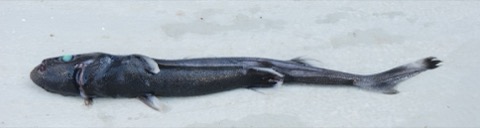
Shark species in Etmopteridae.
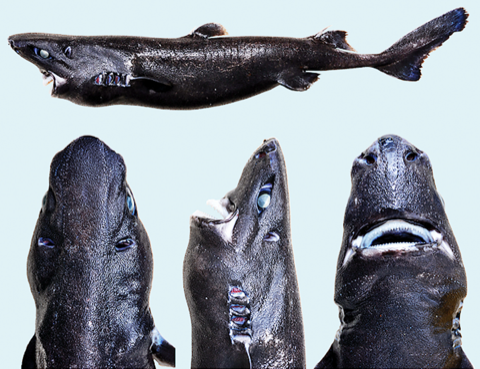
Shark species in Etmopteridae.
Shark species in Etmopteridae.