Reviewed species page
Smalleye lantern shark
Common name: Etmopterus Litvinovi
Etmopterus litvinovi
Etmopterus litvinovi
Least Concern (LC)
Reviewed species page
Common name: Etmopterus Litvinovi
Etmopterus litvinovi
A Southeast Pacific lanternshark with a verified least-concern conservation assessment. Most lanternsharks are small, dark sharks with no anal fin, dorsal spines, and light-producing photophores arranged in species-specific patterns. Recorded from the Southeast Pacific.
They usually inhabit outer continental shelves, slopes, seamount flanks, and deep pelagic layers, often well below sunlight.
Why it matters: The photophore patterns of lanternsharks are so distinctive that they can help separate similar-looking species.
Most lanternsharks are small, dark sharks with no anal fin, dorsal spines, and light-producing photophores arranged in species-specific patterns.
Recorded from the Southeast Pacific.
They usually inhabit outer continental shelves, slopes, seamount flanks, and deep pelagic layers, often well below sunlight.
Compare it against Brown lanternshark, Etmopterus Alphus, and Ninja lanternshark.
They seldom interact directly with people. Most information comes from deepwater surveys and incidental capture.
Most species are poorly observed but likely make limited vertical movements and spend much of their time in dim or dark water. Some may aggregate by size or sex.
These links are meant to help readers continue through related species, not force extra clicks.
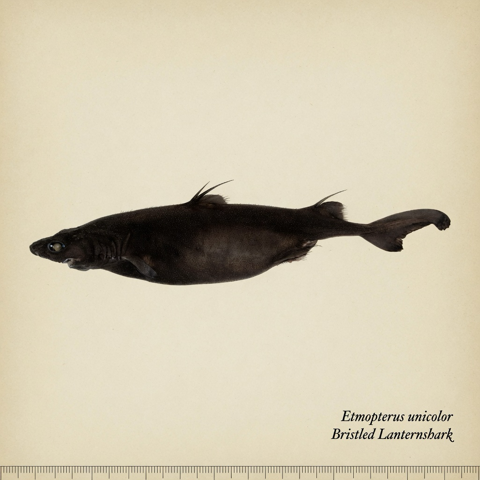
Etmopterus unicolor
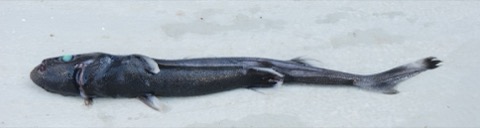
Etmopterus alphus profile
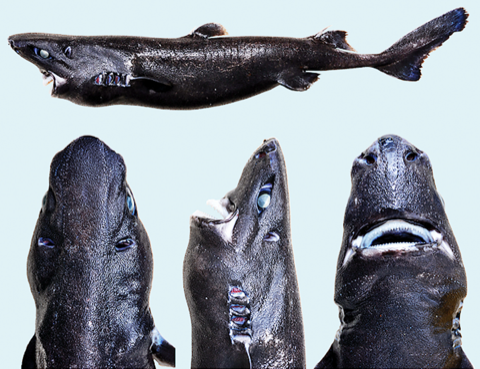
Common name: Etmopterus Benchleyi
Etmopterus benchleyi
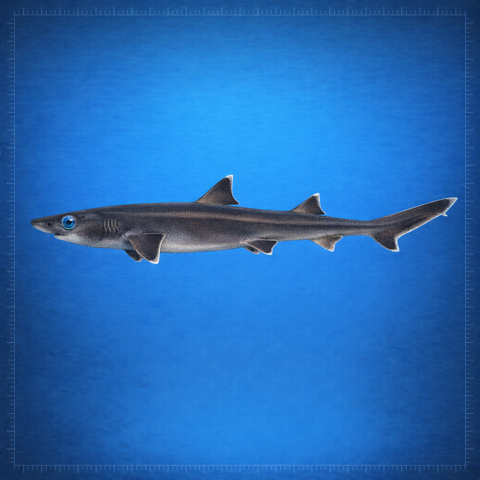
Etmopterus brosei profile