Species page
Frilled Shark
A deep-water, eel-like shark with frilled gill slits.
Chlamydoselachus anguineus
Least Concern
Species page
A deep-water, eel-like shark with frilled gill slits.
Frilled sharks are deepwater specialists with an unmistakably old-looking silhouette: long body, wide mouth, and ruffled gills. They are among the least likely sharks to be seen alive by ordinary coastal observers. Frilled sharks look eel-like, with a long body, terminal mouth, many tricuspid teeth, and the first gill slits forming a frilled collar behind the head. Frilled sharks have patchy records in the Atlantic, Indian, and Pacific oceans, usually tied to deep continental slope and seamount environments. Some species appear to have more restricted regional distributions than the family as a whole.
They occupy deepwater habitats from outer shelf breaks to continental slopes and rises, rarely entering shallow coastal settings.
A bathydemersal shark with occasional surfacing captures and occasional records in trawl surveys.
Why it matters: The frilled gill openings give this ancient-looking shark one of the most unusual head profiles in the group.
Frilled sharks look eel-like, with a long body, terminal mouth, many tricuspid teeth, and the first gill slits forming a frilled collar behind the head.
Frilled sharks have patchy records in the Atlantic, Indian, and Pacific oceans, usually tied to deep continental slope and seamount environments. Some species appear to have more restricted regional distributions than the family as a whole.
They occupy deepwater habitats from outer shelf breaks to continental slopes and rises, rarely entering shallow coastal settings.
Flap-like pectoral fins and frilled gill openings
Compare it against Southern frilled shark, American Pocket Shark, and Dwarf Lanternshark.
Public encounters are exceptionally rare. Most records come from deepwater captures or specimens brought up from depth.
Species-level taxonomy was verified from Sharkipedia's current species list and taxonomy workbook. In this pass, the narrative fields are cautious family-level placeholders synthesized from broad shark references, chiefly the FAO Sharks of the World catalogue, because a stronger multi-source species-level synthesis was not assembled here without risking invented detail. Replace this with a direct species-level synthesis before publication in the app.
These links are meant to help readers continue through related species, not force extra clicks.
Common name: Southern African frilled shark
Shark species in Chlamydoselachidae.
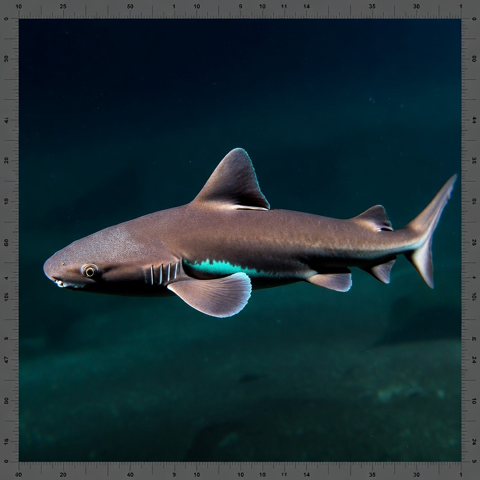
Tiny deep-sea shark with glowing pocket glands near its front fins.
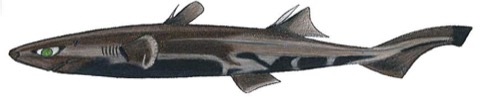
One of the smallest sharks on Earth.
A deep-sea ambush shark with an extendable jaw.