Species page
bigeye sixgill shark
Shark species in Hexanchidae.
Hexanchus nakamurai
Species page
Shark species in Hexanchidae.
Cow and sevengill sharks are unmistakable once you notice the one dorsal fin and extra gill slits. This family profile fits sharks that feel ancient in outline: broad-headed, powerful, and often tied to deeper water. Hexanchids are easy to separate from most modern sharks because they have only one dorsal fin and six or seven gill slits instead of the usual five. Cow and sevengill sharks occur in many temperate and tropical seas around the world. Some species range from continental shelves into very deep offshore waters, while others are more coastal.
The family spans cold deep basins, fjords, shelf edges, and shallow coastal embayments, depending on species.
Added from the World Register of Marine Species (WoRMS).
Why it matters: Their extra gill slits make them look like a throwback to older shark lineages.
Hexanchids are easy to separate from most modern sharks because they have only one dorsal fin and six or seven gill slits instead of the usual five.
Cow and sevengill sharks occur in many temperate and tropical seas around the world. Some species range from continental shelves into very deep offshore waters, while others are more coastal.
The family spans cold deep basins, fjords, shelf edges, and shallow coastal embayments, depending on species.
Family: Hexanchidae
Compare it against bluntnose sixgill shark, sixgill shark, and broadnose sevengill shark.
Direct encounters with people are uncommon outside a few coastal species and dive sites. Fisheries bycatch and local depletion are bigger issues than ordinary contact.
Species-level taxonomy was verified from Sharkipedia's current species list and taxonomy workbook. In this pass, the narrative fields are cautious family-level placeholders synthesized from broad shark references, chiefly the FAO Sharks of the World catalogue, because a stronger multi-source species-level synthesis was not assembled here without risking invented detail. Replace this with a direct species-level synthesis before publication in the app.
These links are meant to help readers continue through related species, not force extra clicks.
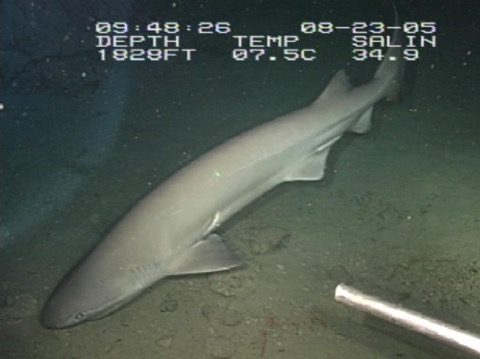
Shark species in Hexanchidae.
Shark species in Hexanchidae.
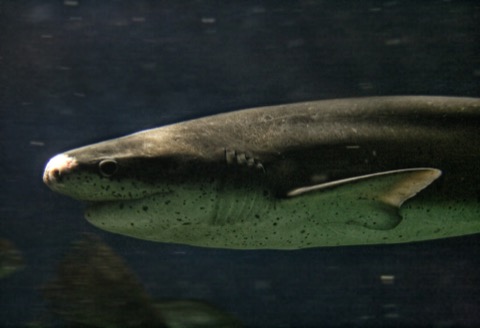
Shark species in Hexanchidae.
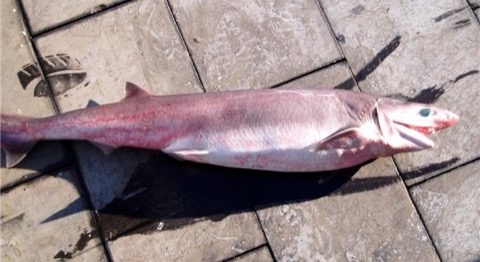
Shark species in Hexanchidae.