Overview

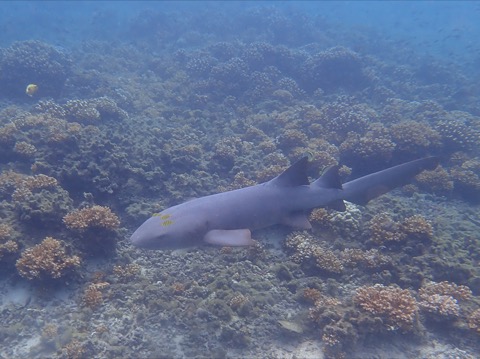
This species belongs to the nurse shark family, a group better known for bottom-resting patience than for speed. Look for barbels, a broad head, and a habit of cruising slowly over reef and sand. Nurse sharks have a broad head, two barbels near the mouth, small eyes, and a generally soft, rounded appearance compared with active requiem sharks. Nurse sharks and close relatives occur mainly in tropical and subtropical coastal waters of the Atlantic and Indo-West Pacific. Species ranges vary from broad warm-water distributions to more regional patterns.

They favor shallow reefs, sandy flats, channels, lagoons, mangrove edges, and other structured coastal habitats where resting cover is available.

Added from the World Register of Marine Species (WoRMS).

Why it matters: The mouth works like a suction tool, helping these sharks pull prey from crevices.

Common nameTawny nurse shark
Scientific nameNebrius ferrugineus
FamilyGinglymostomatidae
OrderOrectolobiformes
Max length3.2 m
Depth range0 to 0 meters
RegionMozambique, Mozambican EEZ, Kenya
DietData not available in this offline release.
HabitatMarine waters (habitat data not available locally).
Why it stands outFamily: Ginglymostomatidae

What this shark is

Nurse sharks have a broad head, two barbels near the mouth, small eyes, and a generally soft, rounded appearance compared with active requiem sharks.

Where it lives

Nurse sharks and close relatives occur mainly in tropical and subtropical coastal waters of the Atlantic and Indo-West Pacific. Species ranges vary from broad warm-water distributions to more regional patterns.

They favor shallow reefs, sandy flats, channels, lagoons, mangrove edges, and other structured coastal habitats where resting cover is available.

How it differs from similar sharks

Family: Ginglymostomatidae

Compare it against Ginglymostoma Unami, nurse shark, and African spotted catshark.

Why it is notable

They are often approachable and usually calm, but a provoked or restrained nurse shark can bite hard and hold on. Habitat change and fisheries also affect some populations.

Species-level taxonomy was verified from Sharkipedia's current species list and taxonomy workbook. In this pass, the narrative fields are cautious family-level placeholders synthesized from broad shark references, chiefly the FAO Sharks of the World catalogue, because a stronger multi-source species-level synthesis was not assembled here without risking invented detail. Replace this with a direct species-level synthesis before publication in the app.

Related shark pages

These links are meant to help readers continue through related species, not force extra clicks.

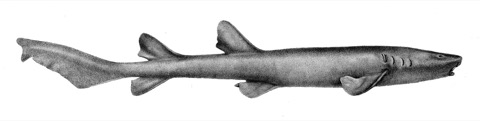
Historic short-tail nurse shark reference image showing the broad head and shortened tail region; not to scale.
Pseudoginglymostoma brevicaudatum

nurse shark

Common name: Short-tail nurse shark

Shark species in Ginglymostomatidae.

0.8 m max
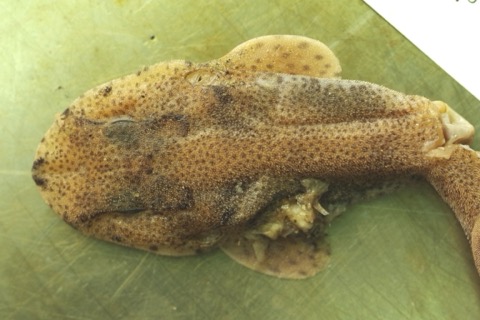
Balloon catshark scientific figure showing the stout body and broad head; not to scale.
Cephaloscyllium sufflans

balloon shark

Shark species in Scyliorhinidae.

1.1 m max