Species page
bumpytail ragged-tooth shark
Common name: Smalltooth sand tiger
Shark species in Odontaspididae.
Odontaspis ferox
Species page
Common name: Smalltooth sand tiger
Shark species in Odontaspididae.
Sand tiger relatives often look fierce before they act fierce, thanks to long teeth that protrude even when the mouth is shut. In PocketShark, the key message is slow-moving coastal predator, not speed-driven pelagic hunter. The typical look is a bulky body with long narrow teeth that remain visible when the mouth is closed, giving a shaggy-toothed appearance. Sand tiger and related sharks occur in warm-temperate and tropical seas, mostly on shelves, around islands, and near the shelf edge.
They use coastal waters, reefs, sandy channels, and offshore slopes, depending on species and life stage.
Added from the World Register of Marine Species (WoRMS).
Why it matters: Because only a few embryos survive each pregnancy in the best-known species, this family has one of the most unusual reproductive systems in sharks.
The typical look is a bulky body with long narrow teeth that remain visible when the mouth is closed, giving a shaggy-toothed appearance.
Sand tiger and related sharks occur in warm-temperate and tropical seas, mostly on shelves, around islands, and near the shelf edge.
They use coastal waters, reefs, sandy channels, and offshore slopes, depending on species and life stage.
Family: Odontaspididae
Compare it against bigeye sand tiger, Porbeagle, and Japanese mackerel shark.
Despite their dramatic dentition, they are usually not aggressive toward divers. Population pressure from coastal fisheries and slow reproduction is the more important story.
Species-level taxonomy was verified from Sharkipedia's current species list and taxonomy workbook. In this pass, the narrative fields are cautious family-level placeholders synthesized from broad shark references, chiefly the FAO Sharks of the World catalogue, because a stronger multi-source species-level synthesis was not assembled here without risking invented detail. Replace this with a direct species-level synthesis before publication in the app.
These links are meant to help readers continue through related species, not force extra clicks.
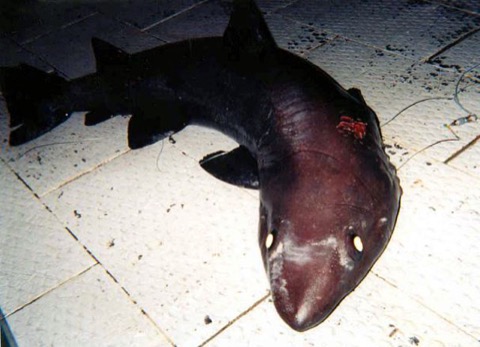
Shark species in Odontaspididae.
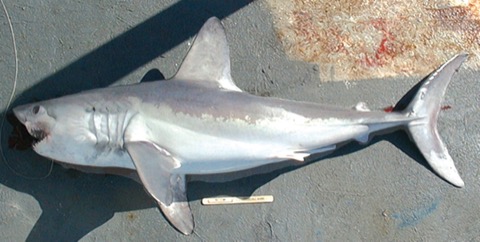
Common name: Atlantic mackerel shark
Shark species in Lamnidae.
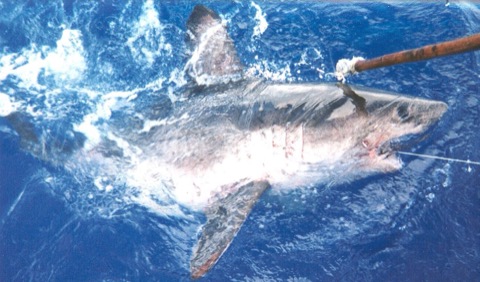
Common name: Salmon shark
Shark species in Lamnidae.
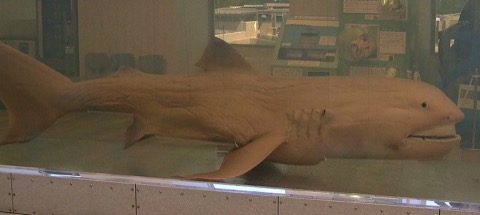
Common name: Megamouth shark
Shark species in Megachasmidae.