Species page

Rhizoprionodon Lalandii

This shark belongs to the requiem shark family, a diverse group that includes many familiar coastal and reef species. Use the entry as a cautious base note: sleek shape, active swimming, and live-bearing reproduction are common family themes. Typical requiem sharks are streamlined, with two dorsal fins, an anal fin, five gill slits, and a distinct nictitating lower eyelid. Color is often gray to bronze above with a pale underside. Requiem sharks occupy tropical and warm-temperate seas worldwide, from coastal estuaries and reefs to outer shelves and open ocean. Individual species may be strongly coastal, strongly pelagic, or somewhere in between.

Rhizoprionodon lalandii
Overview

This shark belongs to the requiem shark family, a diverse group that includes many familiar coastal and reef species. Use the entry as a cautious base note: sleek shape, active swimming, and live-bearing reproduction are common family themes. Typical requiem sharks are streamlined, with two dorsal fins, an anal fin, five gill slits, and a distinct nictitating lower eyelid. Color is often gray to bronze above with a pale underside. Requiem sharks occupy tropical and warm-temperate seas worldwide, from coastal estuaries and reefs to outer shelves and open ocean. Individual species may be strongly coastal, strongly pelagic, or somewhere in between.

This family uses an unusually wide span of habitats, including surf zones, mangroves, coral reefs, seagrass flats, shelf edges, and oceanic waters.

Why it matters: Many requiem sharks depend on shallow nursery grounds where pups spend their early months away from larger predators.

Scientific nameRhizoprionodon lalandii
FamilyCarcharhinidae
OrderCarcharhiniformes
Max length0.8 m

What this shark is

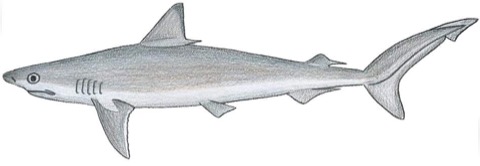
Typical requiem sharks are streamlined, with two dorsal fins, an anal fin, five gill slits, and a distinct nictitating lower eyelid. Color is often gray to bronze above with a pale underside.

Where it lives

Requiem sharks occupy tropical and warm-temperate seas worldwide, from coastal estuaries and reefs to outer shelves and open ocean. Individual species may be strongly coastal, strongly pelagic, or somewhere in between.

This family uses an unusually wide span of habitats, including surf zones, mangroves, coral reefs, seagrass flats, shelf edges, and oceanic waters.

How it differs from similar sharks

Body shape, size, and habitat are the main cues that separate it from related sharks.

Compare it against Atlantic sharpnose shark, Caribbean sharpnose shark, and Pacific sharpnose shark.

Why it is notable

Some of the best-known large sharks in tropical waters belong to this family, so human encounters do occur. Even so, fishery pressure, bycatch, and habitat loss usually matter more than direct conflict.

Related shark pages

These links are meant to help readers continue through related species, not force extra clicks.

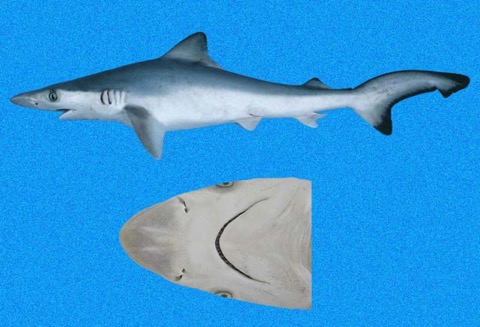
Atlantic sharpnose shark reference photograph showing the slender snout and small first dorsal fin; not to scale.
Rhizoprionodon terraenovae

Atlantic sharpnose shark

This shark belongs to the requiem shark family, a diverse group that includes many familiar coastal and reef species. Use the entry as a cautious base note: sleek shape, active swimming, and live-bearing reproduction are common family themes.

1.1 m max
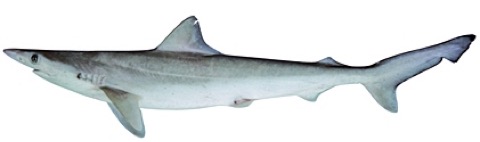
Caribbean sharpnose shark reference photograph showing the slim body and pointed snout; not to scale.
Rhizoprionodon porosus

Caribbean sharpnose shark

This shark belongs to the requiem shark family, a diverse group that includes many familiar coastal and reef species. Use the entry as a cautious base note: sleek shape, active swimming, and live-bearing reproduction are common family themes.

1.1 m max
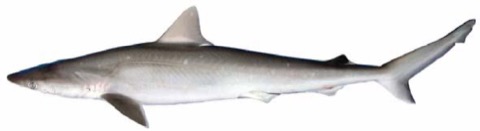
Pacific sharpnose shark reference image showing the narrow snout and slender body; not to scale.
Rhizoprionodon longurio

Pacific sharpnose shark

This shark belongs to the requiem shark family, a diverse group that includes many familiar coastal and reef species. Use the entry as a cautious base note: sleek shape, active swimming, and live-bearing reproduction are common family themes.

1.5 m max
Australian sharpnose shark reference photograph showing the streamlined body and pointed snout; not to scale.
Rhizoprionodon taylori

Rhizoprionodon Taylori

This shark belongs to the requiem shark family, a diverse group that includes many familiar coastal and reef species. Use the entry as a cautious base note: sleek shape, active swimming, and live-bearing reproduction are common family themes.

0.7 m max