Species page
Silky Shark
Dark-bodied open-ocean hunter with a silky texture.
Carcharhinus falciformis
Near Threatened
Species page
Dark-bodied open-ocean hunter with a silky texture.
This shark belongs to the requiem shark family, a diverse group that includes many familiar coastal and reef species. Use the entry as a cautious base note: sleek shape, active swimming, and live-bearing reproduction are common family themes. Typical requiem sharks are streamlined, with two dorsal fins, an anal fin, five gill slits, and a distinct nictitating lower eyelid. Color is often gray to bronze above with a pale underside. Requiem sharks occupy tropical and warm-temperate seas worldwide, from coastal estuaries and reefs to outer shelves and open ocean. Individual species may be strongly coastal, strongly pelagic, or somewhere in between.
This family uses an unusually wide span of habitats, including surf zones, mangroves, coral reefs, seagrass flats, shelf edges, and oceanic waters.
A common target in pelagic fisheries where bycatch can be high.
Why it matters: Many requiem sharks depend on shallow nursery grounds where pups spend their early months away from larger predators.
Typical requiem sharks are streamlined, with two dorsal fins, an anal fin, five gill slits, and a distinct nictitating lower eyelid. Color is often gray to bronze above with a pale underside.
Requiem sharks occupy tropical and warm-temperate seas worldwide, from coastal estuaries and reefs to outer shelves and open ocean. Individual species may be strongly coastal, strongly pelagic, or somewhere in between.
This family uses an unusually wide span of habitats, including surf zones, mangroves, coral reefs, seagrass flats, shelf edges, and oceanic waters.
Fine, smooth dorsal-lateral texture
Compare it against Oceanic Whitetip, Blacknose Shark, and Blacktip Shark.
Some of the best-known large sharks in tropical waters belong to this family, so human encounters do occur. Even so, fishery pressure, bycatch, and habitat loss usually matter more than direct conflict.
Species-level taxonomy was verified from Sharkipedia's current species list and taxonomy workbook. In this pass, the narrative fields are cautious family-level placeholders synthesized from broad shark references, chiefly the FAO Sharks of the World catalogue, because a stronger multi-source species-level synthesis was not assembled here without risking invented detail. Replace this with a direct species-level synthesis before publication in the app.
These links are meant to help readers continue through related species, not force extra clicks.

Common name: Oceanic whitetip shark
Open-ocean shark with tall, white-tipped fins.
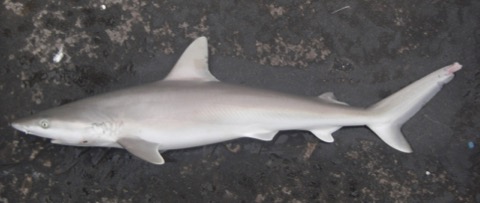
Small coastal shark with a raised dorsal 'blacknose' profile.
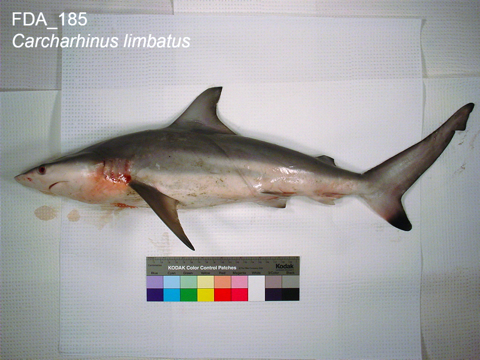
Fast, agile coastal shark with black-tipped fins.
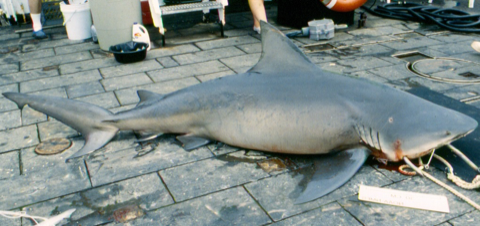
A tough coastal shark that tolerates brackish and fresh water.