Species page

African angelshark

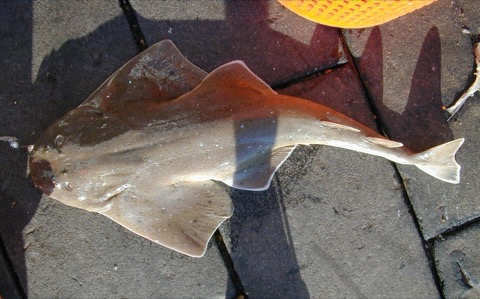
Angelsharks are ambush hunters that lie flat on the seabed like living leaf-shaped traps. Their ray-like outline is deceptive, but the side gill slits and classic shark tail give the game away. The body is strongly flattened, with broad pectoral and pelvic fins that make the shark look ray-like at first glance, though the gill slits remain on the sides of the head. Angelsharks occur in temperate and tropical shelf seas, often with strongly regional species replacing one another from basin to basin.

Squatina africana
Overview

Angelsharks are ambush hunters that lie flat on the seabed like living leaf-shaped traps. Their ray-like outline is deceptive, but the side gill slits and classic shark tail give the game away. The body is strongly flattened, with broad pectoral and pelvic fins that make the shark look ray-like at first glance, though the gill slits remain on the sides of the head. Angelsharks occur in temperate and tropical shelf seas, often with strongly regional species replacing one another from basin to basin.

They are benthic ambush sharks of sandy bottoms, mixed sediments, reefs, and upper-slope habitats.

Why it matters: An angelshark can disappear into sand so completely that only the eyes and spiracles remain visible.

Scientific nameSquatina africana
FamilySquatinidae
OrderSquatiniformes
Max length1.1 m
RegionMozambique, Mozambican EEZ, Tanzania

What this shark is

The body is strongly flattened, with broad pectoral and pelvic fins that make the shark look ray-like at first glance, though the gill slits remain on the sides of the head.

Where it lives

Angelsharks occur in temperate and tropical shelf seas, often with strongly regional species replacing one another from basin to basin.

They are benthic ambush sharks of sandy bottoms, mixed sediments, reefs, and upper-slope habitats.

How it differs from similar sharks

Body shape, size, and habitat are the main cues that separate it from related sharks.

Compare it against Atlantic angel shark, Pacific angel shark, and Squatina Albipunctata.

Why it is notable

They are generally not dangerous unless stepped on or disturbed at very close range. Bottom trawling and coastal fisheries have caused major declines in several species.

Related shark pages

These links are meant to help readers continue through related species, not force extra clicks.

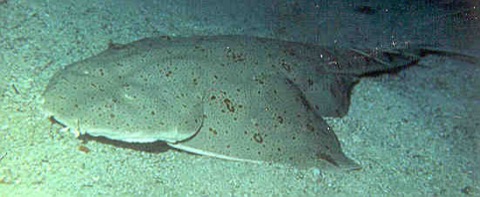
Atlantic angel shark reference photograph showing the flattened head and broad pectoral fins; not to scale.
Squatina dumeril

Atlantic angel shark

Angelsharks are ambush hunters that lie flat on the seabed like living leaf-shaped traps. Their ray-like outline is deceptive, but the side gill slits and classic shark tail give the game away.

1.5 m max
Pacific angel shark reference photograph showing the broad pectoral fins and sand-colored camouflage; not to scale.
Squatina californica

Pacific angel shark

Angelsharks are ambush hunters that lie flat on the seabed like living leaf-shaped traps. Their ray-like outline is deceptive, but the side gill slits and classic shark tail give the game away.

1.5 m max
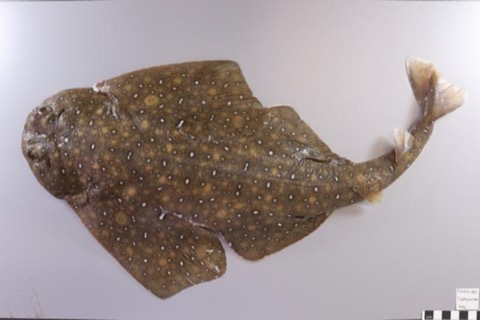
Australian Museum specimen photograph of Squatina albipunctata in dorsal view; not to scale.
Squatina albipunctata

Squatina Albipunctata

Angelsharks are ambush hunters that lie flat on the seabed like living leaf-shaped traps. Their ray-like outline is deceptive, but the side gill slits and classic shark tail give the game away.

1.0 m max
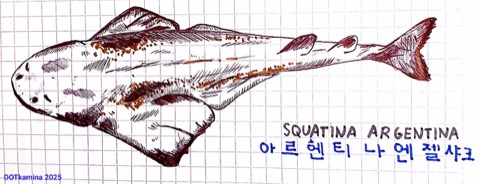
Argentine angel shark photograph showing the flattened body and broad pectoral fins; not to scale.
Squatina argentina

Squatina Argentina

Angelsharks are ambush hunters that lie flat on the seabed like living leaf-shaped traps. Their ray-like outline is deceptive, but the side gill slits and classic shark tail give the game away.

1.7 m max