Species page
cobbler carpet shark
Shark species in Orectolobidae.
Sutorectus tentaculatus
Species page
Shark species in Orectolobidae.
Wobbegongs are ambush carpet sharks that disappear into the bottom until they almost seem painted onto it. For field ID, start with the flat body, decorated head, and elaborate camouflage. Flattened bodies, broad heads, elaborate skin lobes around the mouth, and ornate camouflage make the family stand out immediately. Wobbegongs are concentrated in the Indo-West Pacific, especially around Australia and nearby tropical to warm-temperate shelves.
They are bottom-associated sharks of reefs, rocky ledges, sponge gardens, and sandy areas beside structure, usually in shallow to moderate depths.
Added from the World Register of Marine Species (WoRMS).
Why it matters: The tassel-like lobes around the mouth help break up the outline of the head against the reef.
Flattened bodies, broad heads, elaborate skin lobes around the mouth, and ornate camouflage make the family stand out immediately.
Wobbegongs are concentrated in the Indo-West Pacific, especially around Australia and nearby tropical to warm-temperate shelves.
They are bottom-associated sharks of reefs, rocky ledges, sponge gardens, and sandy areas beside structure, usually in shallow to moderate depths.
Family: Orectolobidae
Compare it against North Australian wobbegong, Orectolobus Floridus, and Orectolobus Halei.
They are not roaming people-seekers, but a concealed wobbegong can bite if stepped on or disturbed at close range.
Species-level taxonomy was verified from Sharkipedia's current species list and taxonomy workbook. In this pass, the narrative fields are cautious family-level placeholders synthesized from broad shark references, chiefly the FAO Sharks of the World catalogue, because a stronger multi-source species-level synthesis was not assembled here without risking invented detail. Replace this with a direct species-level synthesis before publication in the app.
These links are meant to help readers continue through related species, not force extra clicks.
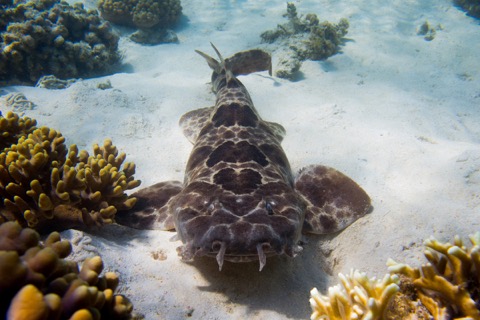
Shark species in Orectolobidae.
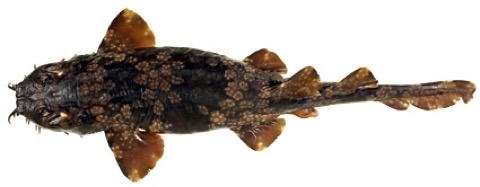
Shark species in Orectolobidae.
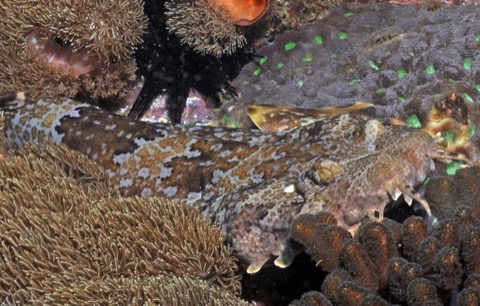
Shark species in Orectolobidae.
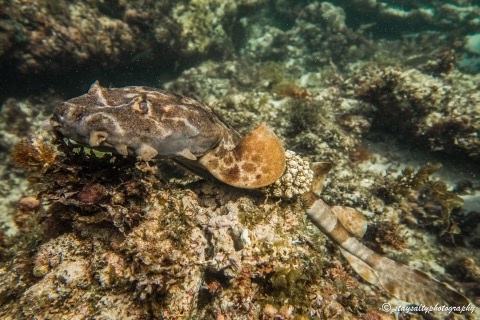
Shark species in Orectolobidae.