Species page
Whale Shark
The planet's largest fish, but a gentle filter feeder.
Rhincodon typus
Endangered
Species page
The planet's largest fish, but a gentle filter feeder.
The whale shark is the largest fish in the sea, yet it lives on tiny prey filtered from the water. Its spotted pattern, broad head, and calm feeding behavior make it one of the easiest giant sharks to recognize. The broad flat head, immense terminal mouth, checker-like pattern of pale spots and stripes, and huge size make this family unmistakable. Whale sharks occur in tropical and warm-temperate seas worldwide, especially where seasonal plankton blooms or fish spawning events create dense feeding opportunities.
Although often seen near the surface, they use both coastal aggregation sites and offshore oceanic habitat, including surprisingly deep water.
A flagship species for shark tourism and conservation.
Why it matters: The spot pattern on each whale shark is individually distinctive enough to be used like a natural fingerprint.
The broad flat head, immense terminal mouth, checker-like pattern of pale spots and stripes, and huge size make this family unmistakable.
Whale sharks occur in tropical and warm-temperate seas worldwide, especially where seasonal plankton blooms or fish spawning events create dense feeding opportunities.
Although often seen near the surface, they use both coastal aggregation sites and offshore oceanic habitat, including surprisingly deep water.
Massive filter-feeding mouth
Compare it against Basking Shark.
Whale sharks are gentle and widely sought by ecotourism operators. Vessel strikes, entanglement, and fishing pressure are more serious threats than direct conflict.
Species-level taxonomy was verified from Sharkipedia's current species list and taxonomy workbook. In this pass, the narrative fields are cautious family-level placeholders synthesized from broad shark references, chiefly the FAO Sharks of the World catalogue, because a stronger multi-source species-level synthesis was not assembled here without risking invented detail. Replace this with a direct species-level synthesis before publication in the app.
These links are meant to help readers continue through related species, not force extra clicks.
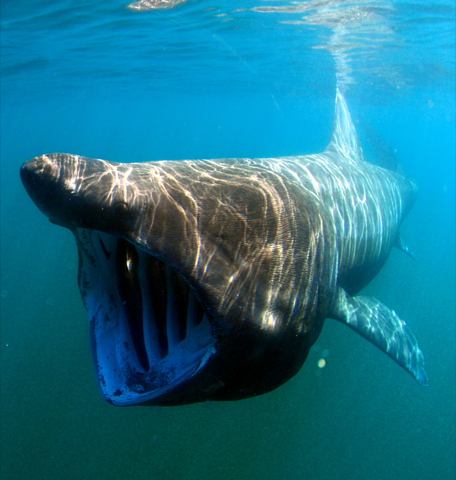
Huge open-mouthed filter feeder of cooler seas.