Species page

Carolina hammerhead

Common name: Sphyrna Gilberti

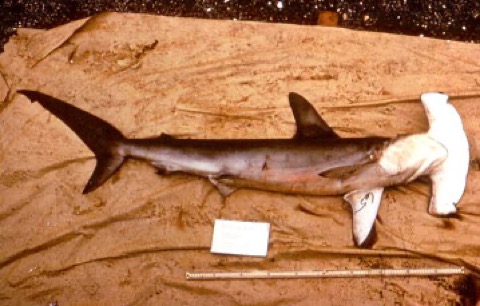
This shark belongs to the hammerhead family, where the head itself is the signature field mark. PocketShark uses that broad sensory platform as the visual anchor, then adds species-specific differences when the source base is stronger. The side-expanded head is the obvious character, but body shape, dorsal-fin proportions, and the outline of the cephalofoil help separate species. Hammerheads occur mainly in tropical, subtropical, and warm-temperate seas worldwide. Species ranges span estuaries, reefs, continental shelves, and open ocean.

Sphyrna gilberti
Overview

This shark belongs to the hammerhead family, where the head itself is the signature field mark. PocketShark uses that broad sensory platform as the visual anchor, then adds species-specific differences when the source base is stronger. The side-expanded head is the obvious character, but body shape, dorsal-fin proportions, and the outline of the cephalofoil help separate species. Hammerheads occur mainly in tropical, subtropical, and warm-temperate seas worldwide. Species ranges span estuaries, reefs, continental shelves, and open ocean.

The family uses both coastal and pelagic habitat, with juveniles often favoring shallow nursery areas and larger animals moving more broadly.

Why it matters: The hammer-shaped head spreads sensory organs over a wide area, which may improve navigation and prey detection.

Common nameSphyrna Gilberti
Scientific nameSphyrna gilberti
FamilySphyrnidae
OrderCarcharhiniformes
RegionWest Atlantic

What this shark is

The side-expanded head is the obvious character, but body shape, dorsal-fin proportions, and the outline of the cephalofoil help separate species.

Where it lives

Hammerheads occur mainly in tropical, subtropical, and warm-temperate seas worldwide. Species ranges span estuaries, reefs, continental shelves, and open ocean.

The family uses both coastal and pelagic habitat, with juveniles often favoring shallow nursery areas and larger animals moving more broadly.

How it differs from similar sharks

Body shape, size, and habitat are the main cues that separate it from related sharks.

Compare it against Sphyrna Alleni, Sphyrna Couardi, and Sphyrna Vespertina.

Why it is notable

Some large hammerheads deserve caution, yet direct incidents are uncommon compared with the scale of fishery mortality faced by the family.

Related shark pages

These links are meant to help readers continue through related species, not force extra clicks.

Sphyrna alleni

Sphyrna Alleni

A shark in the carcharhiniformes group.

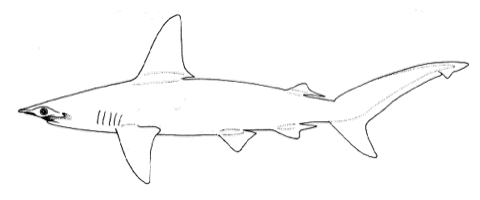
Illustration of Sphyrna couardi in lateral view with the broad hammer-shaped head emphasized; not to scale.
Sphyrna couardi

Sphyrna Couardi

A shark in the carcharhiniformes group.

3.0 m max
Smooth hammerhead reference photograph showing the gently curved hammer and tall dorsal fin; not to scale.
Sphyrna zygaena

Smooth hammerhead

Common name: hammerhead

Smooth hammerheads move between coastal and offshore waters, sometimes forming elegant schools when young. Their broad, unnotched hammer sets them apart from more angular relatives. In many regions, their future depends more on fishery management than on public fear.

5.0 m max