Species page

Smooth hammerhead

Common name: hammerhead

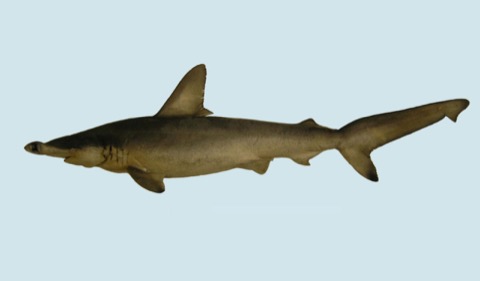
Smooth hammerheads move between coastal and offshore waters, sometimes forming elegant schools when young. Their broad, unnotched hammer sets them apart from more angular relatives. In many regions, their future depends more on fishery management than on public fear. A hammerhead with a broad smooth-edged cephalofoil that lacks the deeper central notch seen in some relatives. The first dorsal fin is tall and falcate, and the body is generally plain gray-brown above with a pale underside. Broad but patchy in temperate and subtropical waters of the Atlantic, Indian, and Pacific Oceans, occurring both near coasts and well offshore.

Sphyrna zygaena
Overview

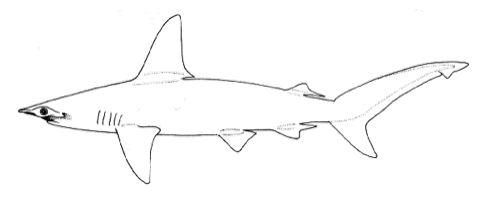
Smooth hammerheads move between coastal and offshore waters, sometimes forming elegant schools when young. Their broad, unnotched hammer sets them apart from more angular relatives. In many regions, their future depends more on fishery management than on public fear. A hammerhead with a broad smooth-edged cephalofoil that lacks the deeper central notch seen in some relatives. The first dorsal fin is tall and falcate, and the body is generally plain gray-brown above with a pale underside. Broad but patchy in temperate and subtropical waters of the Atlantic, Indian, and Pacific Oceans, occurring both near coasts and well offshore.

Uses continental shelves, island slopes, and open-ocean waters from near the surface downward. Young animals may form schools in coastal zones, while larger individuals roam more broadly.

Why it matters: The side-expanded head spreads the eyes and other sensory organs widely apart, improving the shark's sampling of its surroundings.

Common namehammerhead
Scientific nameSphyrna zygaena
FamilySphyrnidae
OrderCarcharhiniformes
Max length5.0 m
RegionNorth Atlantic Ocean, European waters, North West Atlantic

What this shark is

A hammerhead with a broad smooth-edged cephalofoil that lacks the deeper central notch seen in some relatives. The first dorsal fin is tall and falcate, and the body is generally plain gray-brown above with a pale underside.

Where it lives

Broad but patchy in temperate and subtropical waters of the Atlantic, Indian, and Pacific Oceans, occurring both near coasts and well offshore.

Uses continental shelves, island slopes, and open-ocean waters from near the surface downward. Young animals may form schools in coastal zones, while larger individuals roam more broadly.

How it differs from similar sharks

Body shape, size, and habitat are the main cues that separate it from related sharks.

Compare it against Sphyrna Alleni, Sphyrna Couardi, and Carolina hammerhead.

Why it is notable

This species is not among the most frequently encountered sharks for swimmers, though a large individual deserves respect. The bigger conservation problem is capture in coastal and pelagic fisheries, especially because hammerheads are sensitive to overexploitation.

Related shark pages

These links are meant to help readers continue through related species, not force extra clicks.

Sphyrna alleni

Sphyrna Alleni

A shark in the carcharhiniformes group.

Illustration of Sphyrna couardi in lateral view with the broad hammer-shaped head emphasized; not to scale.
Sphyrna couardi

Sphyrna Couardi

A shark in the carcharhiniformes group.

3.0 m max
Carolina hammerhead photograph showing the bonnet-like hammerhead outline in shallow water; not to scale.
Sphyrna gilberti

Carolina hammerhead

Common name: Sphyrna Gilberti

This shark belongs to the hammerhead family, where the head itself is the signature field mark. PocketShark uses that broad sensory platform as the visual anchor, then adds species-specific differences when the source base is stronger.