Reviewed species page
Hidden angel shark
Common name: Squatina Occulta
Squatina occulta
Squatina occulta
Critically Endangered (CR)
Reviewed species page
Common name: Squatina Occulta
Squatina occulta
A critically endangered angelshark of the Southwest Atlantic, known from waters off southern Brazil to southern Uruguay. The body is strongly flattened, with broad pectoral and pelvic fins that make the shark look ray-like at first glance, though the gill slits remain on the sides of the head. Recorded from the Southwest Atlantic, with the known range extending from southern Brazil to southern Uruguay.
They are benthic ambush sharks of sandy bottoms, mixed sediments, reefs, and upper-slope habitats.
Why it matters: An angelshark can disappear into sand so completely that only the eyes and spiracles remain visible.
The body is strongly flattened, with broad pectoral and pelvic fins that make the shark look ray-like at first glance, though the gill slits remain on the sides of the head.
Recorded from the Southwest Atlantic, with the known range extending from southern Brazil to southern Uruguay.
They are benthic ambush sharks of sandy bottoms, mixed sediments, reefs, and upper-slope habitats.
Compare it against African angelshark, Atlantic angel shark, and Pacific angel shark.
They are generally not dangerous unless stepped on or disturbed at very close range. Bottom trawling and coastal fisheries have caused major declines in several species.
Angelsharks spend much of the day partly buried or flattened against the substrate, relying on concealment until prey comes close.
These links are meant to help readers continue through related species, not force extra clicks.
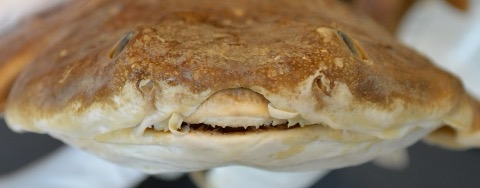
African angelshark
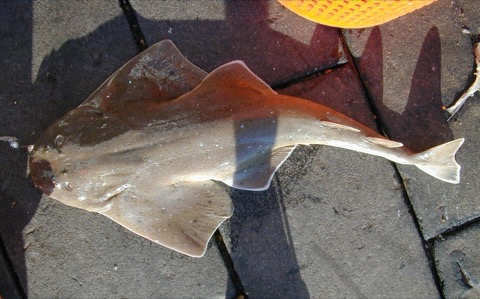
Squatina dumeril profile
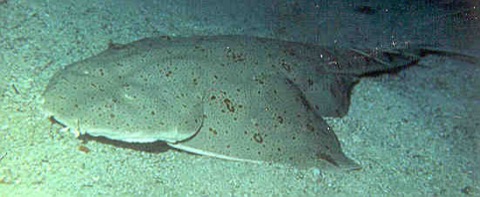
Pacific angel shark
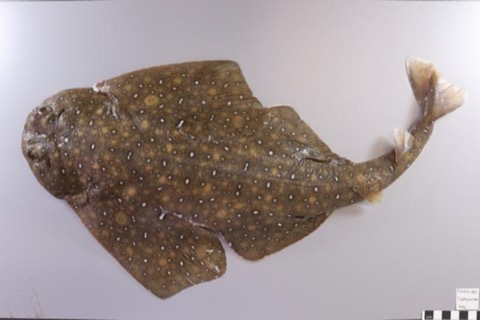
Squatina albipunctata profile